
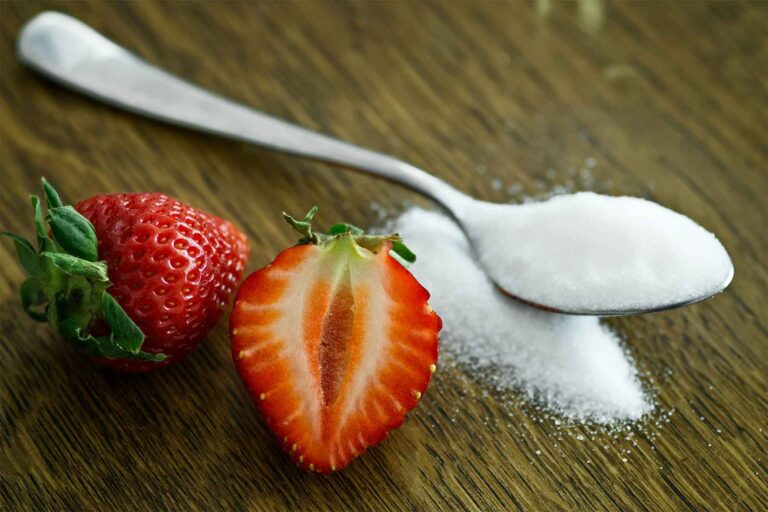
Sugar plays an important role in health.
Our body requires a specific type of sugar called ‘glucose’ to function.
Glucose is a type of sugar that is vitally important for brain function, as well as a major source of energy for our body.
On food labels, there are two types of sugar, free and natural sugars. However, food companies will often just label ‘total sugar’ on their food items, this is the combination of natural and free sugars.
What are free sugars?
Free sugars are added to our food when it is processed.
Food that has a typically high free sugar content includes sweets and confectionary, biscuits, chocolate, flavoured yoghurts, and fizzy drinks.
Whilst ‘home baked’ cakes and confectionary are typically healthier than shop purchased, we do often add large amounts of sugar for flavour.
Naturally occurring syrups, nectars, honey, and fruit juices can also be considered free sugar. When flavouring things such as oats or porridge, even naturally occurring products are considered added sugar.
How much sugar should we consume?
When we are considering sugar in our diet, it is mainly free or added sugars that we should pay particular attention to.
In 2012, it was reported that an adult had a daily added sugar intake of 76g on average. This equates to around 300 calories or 19 teaspoons of added sugar.
The recommended daily intake of added sugar should be around half of that.
Adult men should consume 37g or 150 calories of added sugar.
Adult women should consume 25g or 100 calories of added sugar.
What does 37g of sugar look like?
Popular food items can contain high levels of sugar.
Some of our office favourites amount to a high level, below are some examples.
- 4 medium apples
- 3 bananas
- 1 can of coke
- 15 cups of orange squash
- 5 bars of dairy milk
- 3 glazed donuts
- 3 strawberry yoghurts
Remember to try to maintain a healthy, balanced diet.
Whilst it is fine to have a sweet treat from time to time, there is no need for added sugar to be in our diet, and it can lead to some health problems if we consume too much.