
For everyone who took part in the Great North Run on Sunday 13 September, congratulations.
Completing 13.1 miles is a huge achievement.
Whether it was your first half marathon, a personal best, or simply a personal challenge that you have been working towards for months, crossing that finish line represents a significant physical and mental effort.
But what happens after the finish line is important too.
After putting your body through a demanding event, recovery should become the next priority. It can be tempting to get straight back into your normal routine, return to the gym or simply carry on with everyday life, but your body needs time to repair and adapt.
Good recovery isn’t just important for your muscles, either. It can influence your energy, concentration, mood and mental capacity, all of which can have a knock-on effect on how effectively you perform at work.
And you don’t have to have run a half marathon to benefit from better recovery. The same principles apply after a gym session, a long walk, a football match, a run or any other form of exercise.
Here are our top three tips for recovering effectively.
Prioritise your sleep
Sleep is one of the most powerful recovery tools available to us, yet it is often one of the first things to suffer when life gets busy.
Following exercise, particularly prolonged or high-intensity exercise, your body needs time to repair the tissues and muscles that have been placed under stress. Sleep plays an important role in this recovery process, while also helping your brain recover from the demands of the day.
After completing something like the Great North Run, it is perfectly normal to feel tired for several days. You have placed a considerable physical demand on your body, and trying to ignore that fatigue can make it harder to recover.
Rather than seeing sleep as time when you aren’t being productive, think of it as part of your productivity strategy.
For working adults, this is particularly important. A poor night’s sleep can leave you feeling tired and less able to concentrate. You may find yourself struggling to focus on a task, making decisions more slowly or feeling less patient when dealing with other people.
When you are well rested, you are better placed to use your mental capacity effectively.
This doesn’t mean that one poor night’s sleep will ruin your working day. However, consistently poor sleep can contribute to fatigue and reduced wellbeing, which can make both work and exercise feel more difficult.
Try to establish a consistent sleep routine, particularly following periods of increased physical activity. Give yourself enough time in bed and don’t underestimate the value of allowing your body to recover.
Sometimes the most productive thing you can do is go to bed.
Refuel and rehydrate
Exercise uses energy and, depending on the intensity and duration, can result in significant fluid losses.
Replacing what your body has used is an important part of recovery.
Following a long run or demanding training session, focus on balanced meals containing carbohydrates, protein, fruit and vegetables, alongside maintaining good hydration.
Carbohydrates help replenish the body’s energy stores, while protein provides the nutrients required for muscle repair and recovery. You don’t necessarily need an expensive collection of supplements or a complicated recovery routine. For most people, a balanced diet provides the foundations they need.
Hydration is equally important.
If you’ve completed a long run, particularly in warm conditions, you may have lost a significant amount of fluid through sweating. Replacing those fluids helps your body return towards its normal state.
It is also worth considering how nutrition and hydration affect your working day.
Your brain requires a considerable amount of energy to function effectively. When you’re tired, dehydrated or haven’t eaten properly, concentrating on a demanding task can feel much harder.
Think about how you feel when you’ve rushed out of the house without breakfast, spent several hours working without drinking enough water, or reached mid-afternoon having barely moved away from your desk.
That feeling isn’t necessarily because you are incapable of concentrating. Your body may simply be asking for some basic resources.
Building good habits around food and hydration can therefore support both physical recovery and your ability to function effectively during the working day.
Recovery nutrition isn’t just about preparing your muscles for your next workout. It’s also about giving your body and brain what they need for the rest of your day.
Keep moving, but reduce the intensity
After a major event, complete rest might seem like the obvious answer.
However, recovery doesn’t necessarily mean spending the entire day on the sofa.
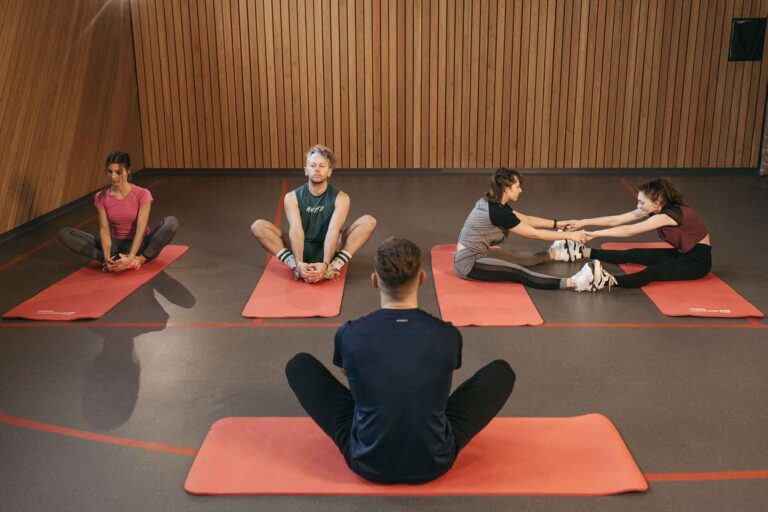
Gentle movement can be useful following exercise. A relaxed walk, some gentle mobility exercises or easy cycling can help you stay mobile without placing the same demands on your body as another hard training session.
The key is to distinguish between recovery movement and another workout.
If your legs are sore after completing the Great North Run, you don’t need to immediately prove that you’re ready to train again. Your body has just completed a significant challenge.
Give it time.
Listen to how you feel and gradually return to your normal exercise routine. You might feel ready to do some gentle movement after a day or two, but that doesn’t necessarily mean you’re ready for another high-intensity session.
This is particularly important for people who exercise around a busy working life.
It can be easy to fall into an all-or-nothing approach: work hard, exercise hard and then carry on regardless of how tired you feel.
But recovery is part of the process.
Exercise provides a stimulus for your body. Recovery gives your body the opportunity to adapt to that stimulus.
The same principle applies whether you’re training for a half marathon or simply trying to become more active.
Recovery can improve more than your physical health
It is easy to think about recovery purely in terms of sore muscles.
But physical and mental recovery are closely connected.
Many of us spend our working days dealing with deadlines, emails, meetings, problem-solving and competing demands for our attention. Add exercise, commuting, family responsibilities and everything else happening outside work, and it is easy to spend very little time actually recovering.
That can eventually leave you feeling like you’re operating with a smaller battery.
You might still be getting everything done, but it can take more effort.
Good recovery can help restore that capacity.
Getting enough sleep, taking time away from work, eating well, staying hydrated and allowing your body to recover from exercise can all contribute to your overall wellbeing. In turn, this can help you feel more alert, focused and capable of dealing with the demands of your working day.
There is also value in psychological recovery.
If you spend your entire evening thinking about work, checking emails and worrying about tomorrow’s workload, your brain isn’t getting much opportunity to switch off.
Similarly, if you are constantly trying to fit demanding exercise around an already busy schedule, you may not be giving yourself enough opportunity to recover physically.
Recovery should therefore be considered as a whole.
Physical recovery + mental recovery = better overall wellbeing.
Don’t rush back
One of the biggest mistakes people make after completing a major physical challenge is trying to get back to normal too quickly.
The Great North Run is a fantastic example.
You may have spent months gradually increasing your training volume, building your fitness and preparing your body for 13.1 miles. Once you cross the finish line, however, there can be a feeling that the hard work is finished.
In reality, your body still has work to do.
Allow yourself time to recover. Get plenty of sleep. Eat well. Stay hydrated. Keep moving gently and gradually return to your normal routine.
And don’t be concerned if your energy levels aren’t immediately back to normal.
Recovery isn’t a sign that you’re doing less. It is an essential part of being able to do more in the future.
The same applies to everyday exercise.
You don’t need to train harder every time you exercise. Sometimes the smartest decision is to reduce the intensity, take a rest day or simply go for a walk.
Recovery is an investment
Whether you’ve just completed the Great North Run, finished a challenging gym session or are simply trying to become more active, remember that recovery is part of your wellbeing routine.
Prioritise your sleep.
Refuel and rehydrate.
Keep moving, but give your body time to recover.
These relatively simple habits can help your body repair and adapt, while also supporting the mental energy and capacity you need away from exercise.
For employers, encouraging recovery is also an important part of creating a healthier workplace. Wellbeing isn’t simply about encouraging employees to exercise more. It is about helping people understand how activity, nutrition, sleep, recovery and mental health work together.
An employee who has the physical and mental capacity to perform at their best is more likely to be able to engage positively with their work and manage the demands of the working day.
So, to everyone who completed the Great North Run on 13 September: well done.
You’ve put in the miles, you’ve taken on the challenge and you’ve earned the achievement.
Now give your body the time and care it needs to recover.
Because sometimes, the next step towards performing at your best isn’t doing more.
It’s recovering better.