
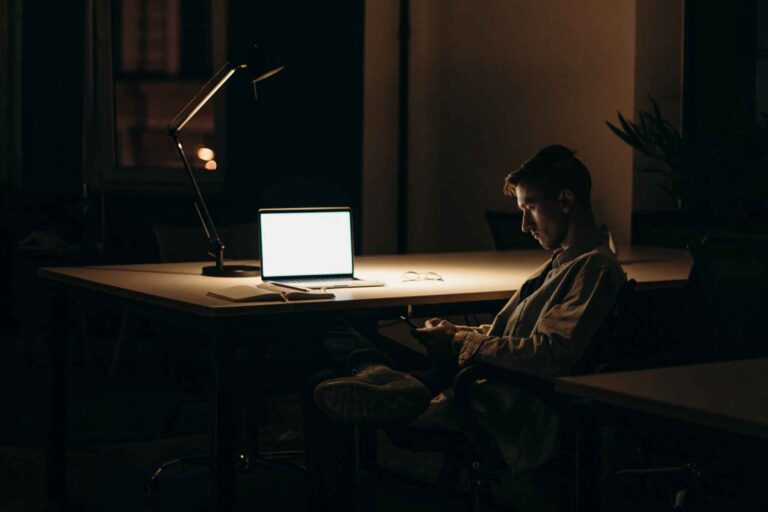
Excessive screen exposure has become a defining feature of modern office life.
For many employees, the working day is spent moving between laptops, multiple monitors, tablets and mobile phones. Even outside working hours, emails, social media and streaming services extend digital engagement well into the evening.
While technology has improved productivity and connectivity, sustained screen time has measurable consequences for physical health, cognitive performance and, critically, sleep quality.
For office workers, understanding how technology affects sleep physiology and daily functioning is essential for long-term wellbeing and performance.
The physiology of sleep and why it matters
Sleep is not passive rest. It is an active biological process governed by circadian rhythms and homeostatic sleep pressure. The circadian rhythm is regulated primarily by light exposure, particularly blue wavelength light. In natural conditions, diminishing evening light signals the brain to release melatonin, the hormone responsible for initiating sleep.
Artificial light from screens disrupts this process. Devices such as laptops, smartphones and tablets emit blue-enriched light that suppresses melatonin production. The result is delayed sleep onset, reduced total sleep time and poorer sleep efficiency. Even modest delays in melatonin release can shift circadian timing, especially when exposure occurs within two hours of intended bedtime.
In occupational terms, insufficient or poor-quality sleep impairs executive function, attention, emotional regulation and decision-making. For office-based roles requiring sustained concentration, strategic thinking and interpersonal communication, sleep disruption directly affects productivity and error rates.
The cumulative impact of prolonged screen time
Beyond circadian disruption, excessive screen time contributes to several secondary effects that further interfere with sleep:
Cognitive overstimulation
Late evening engagement with emails, work tasks or fast-paced media maintains sympathetic nervous system activation. This increases cortisol levels and reduces the likelihood of smooth transition into parasympathetic dominance required for sleep.
Psychological detachment
Occupational recovery depends on mental disengagement from work. Checking emails late at night prevents cognitive detachment, prolonging work-related rumination and stress.
Sedentary behaviour
High screen use correlates with prolonged sitting. Reduced daytime physical activity lowers sleep drive and may reduce deep sleep duration.
Musculoskeletal discomfort
Neck pain, shoulder tension and lower back discomfort associated with desk work can increase nocturnal awakenings and difficulty finding comfortable sleep positions.
Digital presenteeism
The expectation of immediate responsiveness creates pressure to remain connected, reducing psychological boundaries between work and rest.
The result is a feedback loop: poor sleep reduces daytime efficiency, leading to longer working hours and increased evening screen exposure.
Technology and sleep: what the evidence suggests
Research consistently demonstrates that evening exposure to light-emitting devices delays sleep onset and reduces REM sleep. Sleep restriction below seven hours per night is associated with increased risk of cardiovascular disease, metabolic dysfunction, reduced immune resilience and mood disturbance.
For organisations operating in knowledge-based sectors, chronic sleep deprivation across teams can manifest as reduced creativity, slower processing speed and increased absenteeism. At an individual level, employees may experience irritability, reduced motivation and impaired stress tolerance.
This is not an argument against technology. Rather, it highlights the importance of structured digital hygiene.
Practical strategies to manage screen time
Office workers cannot eliminate screen exposure. However, they can manage it deliberately. The following strategies are evidence-informed and practical within a typical working week.
Establish digital boundaries
Define a clear “digital sunset” where possible. Aim to cease non-essential screen use at least 60–90 minutes before bedtime. This allows melatonin levels to rise naturally.
If evening work is unavoidable:
Reduce screen brightness.
Use built-in night mode or blue light filters.
Avoid emotionally charged or cognitively demanding tasks.
Optimise daytime exposure
Counterintuitively, strong morning light exposure strengthens circadian alignment. Begin the day with:
10–20 minutes of natural outdoor light exposure.
Working near windows where feasible.
Taking walking meetings during daylight hours.
This improves alertness during the day and supports sleep onset at night.
Structure work to reduce spill-over
Workplace culture significantly influences screen habits. Individually, employees can:
Schedule focused email blocks rather than continuous checking.
Turn off non-essential notifications.
Communicate availability boundaries clearly.
Organisations can support this by discouraging out-of-hours email expectations.
Use the 20-20-20 rule
To mitigate visual strain and mental fatigue:
Every 20 minutes, look at something 20 feet away for 20 seconds.
This reduces ocular fatigue and can prevent headaches that later interfere with sleep.
Incorporate movement breaks
Short movement breaks every 60–90 minutes:
Improve circulation.
Reduce musculoskeletal strain.
Enhance cognitive performance.
Regular physical activity during the day also increases sleep drive and deep sleep proportion.
Create a sleep-supportive evening routine
Sleep hygiene extends beyond screen reduction. A structured wind-down routine may include:
Low-light environment in the final hour before bed.
Non-digital relaxation activities such as reading printed material.
Gentle stretching or breathing exercises.
Consistent sleep and wake times, even at weekends.
The objective is to signal predictability and safety to the nervous system.
Be intentional with device placement
Avoid keeping smartphones within arm’s reach overnight. Notifications fragment sleep architecture even if the individual does not fully awaken. Charging devices outside the bedroom reduces temptation and improves sleep continuity.
If devices must remain nearby, activate “Do Not Disturb” modes.
Managing remote and hybrid working challenges
Remote and hybrid working models increase the risk of blurred temporal boundaries. Without a commute, the transition between work and home life becomes less defined.
Strategies include:
Establishing a clear end-of-day ritual, such as shutting down the laptop and physically leaving the workspace.
Using separate user profiles for work and personal browsing.
Avoiding working from the bedroom.
Environmental cues reinforce behavioural change.
The psychological component
Screen time is not solely a light exposure issue; it is behavioural. Many individuals use devices to decompress. Scrolling can provide distraction from stress, yet it rarely promotes genuine recovery.
Replacing passive scrolling with restorative activities is more effective:
Conversation with family or housemates.
Light stretching.
Journalling.
Listening to calming audio without a bright screen.
The goal is active recovery rather than digital distraction.
When screen use is unavoidable
Certain roles require late-night digital engagement across time zones. In such cases:
Use blue-light blocking glasses.
Dim ambient lighting.
Prioritise immediate sleep after task completion.
Protect at least one full recovery night per week.
Consistency matters more than perfection.
Signs your screen habits are affecting sleep
Office workers should monitor:
Taking longer than 30 minutes to fall asleep regularly.
Waking unrefreshed despite adequate time in bed.
Reliance on caffeine to maintain function.
Increased irritability or reduced concentration.
These may indicate circadian disruption or insufficient recovery.
The organisational responsibility
Employers have a duty of care regarding employee wellbeing. Practical organisational measures include:
Promoting realistic response-time expectations.
Embedding education on sleep health within wellbeing programmes.
Encouraging use of annual leave without digital tethering.
Designing workloads that do not normalise late-night connectivity.
Digital productivity should not compromise biological sustainability.
Long-term performance and wellbeing
Sustainable high performance depends on recovery. Sleep is the foundation of cognitive resilience, metabolic health and emotional regulation. In office-based environments where mental output is the primary asset, protecting sleep is not optional.
Managing screen time is therefore not about restriction; it is about optimisation. By creating structured boundaries around technology, office workers can maintain productivity during the day while safeguarding restorative sleep at night.
In an era where connectivity is constant, deliberate disconnection has become a professional skill. Those who master it are more likely to experience improved concentration, better mood stability and enhanced long-term wellbeing.
Technology is a tool. Used intelligently, it enhances work. Used indiscriminately, it erodes recovery. The difference lies in behavioural discipline and organisational culture.