

ENHANCING YOUR WELLBEING AT WORK THROUGH GOOD NUTRITIONAL HABITS
In today’s fast-paced corporate world, maintaining optimal health and productivity is crucial for both employees and employers.
One of the most effective ways to achieve this is through good nutritional habits.
Proper nutrition not only regulates blood sugars and reduces blood cholesterol but also prevents co-morbidities such as Type 2 diabetes, provides fuel for muscle repair and daily activities, and boosts the immune system.
Here, we explore these benefits in detail and provide practical tips to help employees adopt healthier eating habits.
Regulate Blood Sugars
Balanced blood sugar levels are essential for sustained energy and concentration throughout the workday. Employees can regulate their blood sugars by:
1. Eating Regularly: Choose three balanced meals a day with healthy snacks in between. Skipping meals can lead to blood sugar spikes and crashes, affecting mood and productivity.
2. Choosing Complex Carbohydrates: Foods like whole grains, vegetables, and legumes release glucose slowly into the bloodstream, providing steady energy levels.
3. Including Protein and Healthy Fats: Combining carbohydrates with protein and healthy fats (e.g., nuts, seeds, and avocados) can further stabilize blood sugar levels.
Reduce Blood Cholesterol
High cholesterol is a major risk factor for heart disease. We can reduce our blood cholesterol by:
1. Eating Fiber-Rich Foods: Soluble fibre found in oats, beans, and fruits helps lower LDL (bad) cholesterol levels.
2. Avoiding Trans Fats: Found in many processed foods, trans fats increase cholesterol levels. Read food labels and avoid products with hydrogenated oils.
3. Including Healthy Fats: Foods rich in omega-3 fatty acids, such as salmon, flaxseeds, and walnuts, can help raise HDL (good) cholesterol levels and lower LDL cholesterol.
Prevent Co-Morbidities Such as Type 2 Diabetes
Preventing Type 2 diabetes involves maintaining a healthy weight and blood sugar levels. Employees can achieve this by:
1. Maintaining a Balanced Diet: A diet rich in whole foods, including vegetables, fruits, whole grains, lean proteins, and healthy fats, supports overall health and weight management.
2. Staying Active: Regular physical activity helps manage weight and improve insulin sensitivity.
3. Limiting Sugary Foods and Drinks: Excessive sugar intake can lead to weight gain and increased blood sugar levels. Encourage water, herbal teas, and low-sugar beverages.
Provide Fuel for Muscle Repair and Daily Activities
Proper nutrition is crucial for muscle repair, especially for employees who engage in regular physical activity. It also fuels daily activities, ensuring employees remain productive and energetic. Key recommendations include:
1. Consuming Adequate Protein: Protein is essential for muscle repair and growth. Include sources such as lean meats, poultry, fish, beans, and legumes in daily meals.
2. Hydrating Well: Water is essential for all bodily functions, including muscle recovery. Drink water throughout the day.
3. Post-Exercise Nutrition: After exercise, a combination of protein and carbohydrates helps replenish glycogen stores and repair muscle tissue. Examples include a smoothie with protein powder and fruit or a chicken and quinoa salad.
Boost Immune System
A strong immune system reduces the likelihood of illness and absenteeism. Employees can boost their immune system through:
1. Eating a Variety of Fruits and Vegetables: These are rich in vitamins, minerals, and antioxidants that support immune health. Aim for a colourful plate to ensure a range of nutrients.
2. Including Probiotic Foods: Foods like yoghurt, kefir, and fermented vegetables support gut health, which is closely linked to immune function.
3. Getting Sufficient Sleep: Adequate sleep is essential for a strong immune system. Nutrition can support good sleep habits; for example, avoid caffeine and heavy meals before bedtime.
Practical Tips for Implementation
1. Healthy Snacks in the Office: Take a range of healthy snack options like fresh fruits, nuts, and whole grain crackers into your workplace.
2. Meal Planning: Plan and prepare balanced meals in advance.
3. Ask a Pro: Talk to us and have an individual dietetic consultation to offer advice about general diet, weight loss, and medical conditions (e.g. diabetes, IBS, IBD, etc.).
4. Match Your Food to Your Exercise: Ask us about a sports performance consultation to offer nutritional guidance on how to improve performance in your chosen sport.
5. Get Your Employer on Board: Ask them to read employer-focused article.
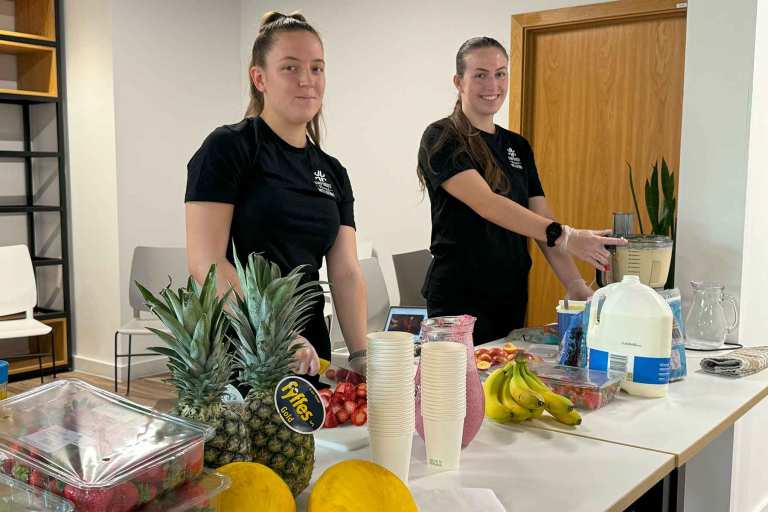
Smoothies for Work
We recently ran a Wellbeing Pop-up Event where our registered nutritionists discussed nutrition at work, and we made batches of smoothies.
Here is our smoothie recipe:
- 150ml liquid (milk/milk alternatives or fruit juice)
- 1 cup frozen fruit
- ½ cup yoghurt (Greek or natural)
- Fresh fruit – strawberries, apple, banana, etc.
Smoothie Variations
These are the typical variations we use at our Wellbeing Pop-ups:
- Tropical – mango, pineapple, banana with orange juice and Greek yoghurt
- Mixed berries – apple, strawberries, frozen raspberries, frozen blueberries with apple juice and natural yoghurt
- Berries and cherries – apple, strawberries, frozen cherries with milk and natural yoghurt
Make it Personal!
Nutrition is individual to everyone, but how can you quickly make adjustments that could, in turn, make a big change?
Smoothies are a form of drink that can be easily customised for anyone’s preferred fruits, allergies or other nutritional needs.
Need some additional fibre?
Add 1-2 tbsp of chia seeds to increase fibre content and provide additional calcium, magnesium, iron and zinc. Also, keep the skin on fruits such as apples to boost fibre content.
Need a smoothie for post-workout?
Increase protein content using Greek yogurt and milk to aid muscular repair and oats to replenish carbohydrate stores but also to provide some slower-release carbohydrates to ensure balanced energy levels.
Need a smoothie to stay fuller for longer?
Increase fibre and protein content as these nutrients take much longer to digest.
Allergies?
Yoghurt can be replaced with substitutes such as soya or coconut alternatives.
Milk can be replaced with fresh fruit juice.
There is no set fruit to include, so any fruit allergies can be accommodated.
Make it happen!
By adopting good nutritional habits, you can enhance your wellbeing at work, leading to increased productivity, and being happier and healthier too.
There are lots of things your employer can do too. Encourage them to read this article about: The benefits of good nutritional habits for employers.