
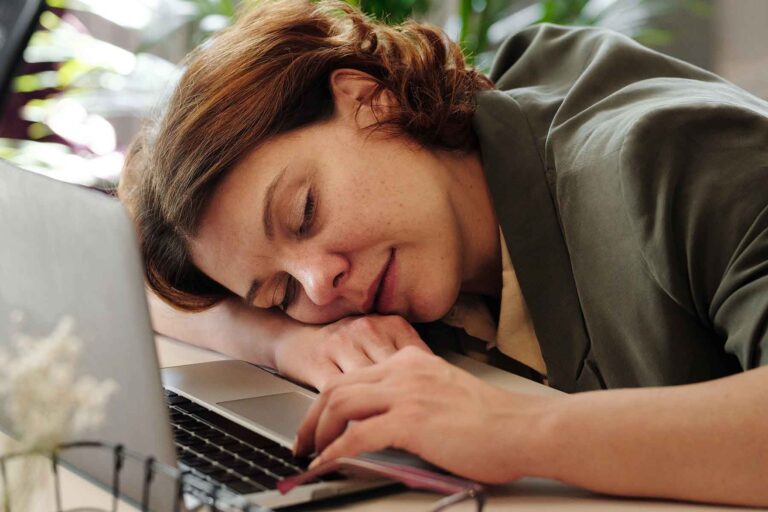
Occasional tiredness is nothing to be worried about.
But feeling tired all the time is not normal and can affect your quality of life at home and work.
If you are tired all the time you should seek help from your GP. Before you do so, it is useful to look at why you might be feeling tired.
Tiredness factors normally fit into three categories.
- Psychological
- Physical
- Lifestyle
The most common area is:
1> Psychological causes of tiredness:
Anxiety
If you are overly worried or anxious it can affect your sleep and make you feel tired. Try taking our free generalised anxiety disorder (GAD) test to see if this may be the issue.
Depression
If you feel down or sad it can affect your energy levels. Speak to a trained counsellor to get some help. Consider joining a proactive employee assistance programme. At work, talk to your manager, HR department or mental health first-aider.
Emotional shock
Relationship breakups and bereavements can leave you feeling tired, exhausted and emotionally drained. Again, speak to a trained counsellor.
Stress
Stress from home and work can affect your feelings of tiredness. Even positive things such as getting married, moving home and promotions at work can cause stress.
2> Physical causes of tiredness:
If your tiredness has lasted more than four weeks it’s worth going to see your GP to check a few physical things.
Common physical factors that affect tiredness can include:
- Side effects from medicines
- Iron deficiency
- Pregnancy
- Underactive thyroid
- Being overweight or underweight
- Cancer treatments
- Carbon monoxide poisoning
- Sleep apnoea
3> Lifestyle causes of tiredness:
These tend to be the easiest to resolve.
Exercise
Both over-exercising and under-exercising can cause tiredness. Please speak to one of our personal trainers for advice.
Alcohol
Try not to have more than 14 units of alcohol per week. Alcohol is proven to give a lower quality sleep that increases tiredness.
Caffeine
Caffeine is often found in energy drinks, colas, coffee and even tea. This stimulant will disrupt your sleep. Cut down your intake and don’t take it at all later in the day. Try decaffeinated versions.
Shiftwork
Working nights sometimes can’t be avoided. If you can, try and keep the timing of the shifts the same so your body’s circadian rhythms stabilise.
Napping
Avoid long daytime naps.
How to fight tiredness
Here are your top tips to fight tiredness and increase your energy:
Exercise
You may not think it but exercise makes you feel less tired. Try moderate exercise such as walking to begin with. Moving about and standing up are great things to do at work. Here are some great ways to exercise at work.
Get a good night’s sleep
This can make all the difference to how tired you feel during the day. Learn how to sleep well.
Get to the right weight
Talk to one of our personal trainers who can advise you on your correct weight. They will be able to help you devise a food plan. Remember being overweight or underweight can lead to tiredness.
Talk to a therapist
Cognitive behavioural therapy or CBT can help with tiring psychological conditions such as anxiety, stress, depression and low mood. Read about how our proactive employee assistance programme can deal with these issues before they become worse.
Cut out the caffeine
Cut down on coffee and caffeinated fizzy drinks.
Stay hydrated
It is easy to get dehydrated. Drink at least 2 litres of water a day and use our pee chart. Staying hydrated helps stop tiredness.
Drink less booze
Alcohol makes you feel tired. Not only should you cut down but try to have several alcohol-free days per week.